
Writing a Business Plan with AI: What Actually Works
A business plan is one of the most consequential documents a founder or business owner will write. It secures investment, guides decision-making, and communicates your vision to partners, banks, and employees. It's also one of the documents most people procrastinate on — sometimes for months.
AI has dramatically changed the business plan writing process — but not by generating a generic document that sounds like every other plan. Here's how to use it correctly.
What Makes a Business Plan Hard to Write
The difficulty isn't lack of ideas — most founders know their business well. The challenges are:
- Structure: what sections are required, in what order, with what level of detail
- Tone: investors and bankers expect a specific register that's neither too casual nor too technical
- Financial narrative: connecting the financial projections to the written strategy
- Completeness: covering market analysis, competitive landscape, operations, and risk without missing anything
- Coherence: each section must logically connect to the next — your market analysis should directly inform your go-to-market strategy
AI resolves all of these simultaneously.
What to Prepare Before Using AI
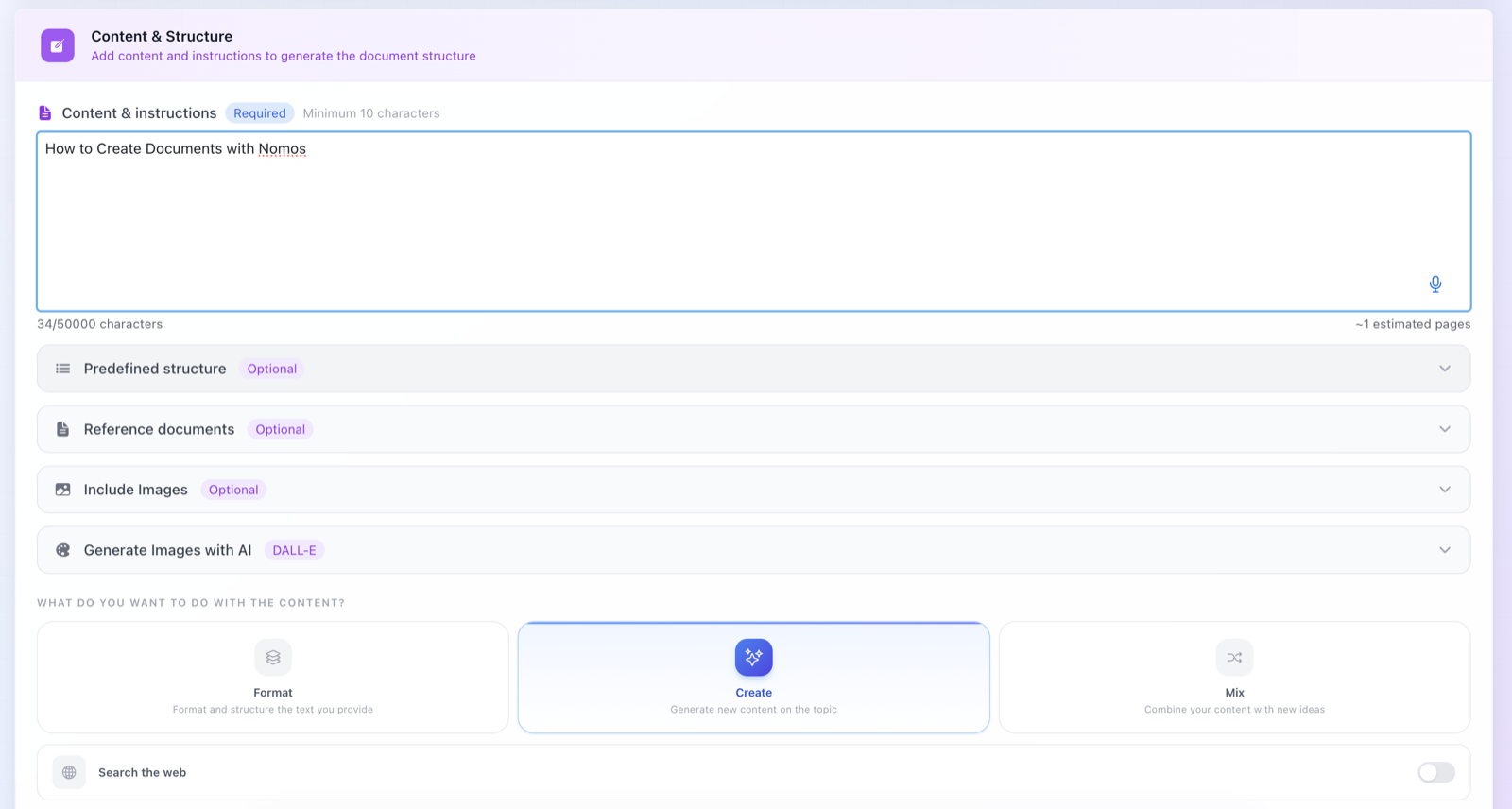
The quality of your business plan depends entirely on the quality of the information you provide. Before using AI:
Business fundamentals:
- Your value proposition: what problem do you solve, for whom, and why better than alternatives
- Your business model: how you make money
- Target market: who your customers are, market size, segments
- Revenue projections: your financial model (even in spreadsheet form)
- Team: founding team background and relevant experience
Research materials:
- Market reports or competitor analyses you've gathered
- Customer research or validation data (interviews, surveys, early sales)
- Industry benchmark data (growth rates, margins, CAC, LTV by sector)
- Regulatory context if applicable
Reference documents:
- A previous version of your plan (if updating an existing one)
- Investor pitch deck (useful as a source of key messages)
- Relevant industry reports
Section-by-Section: How AI Helps
Executive Summary
This is written last but appears first. AI generates an excellent executive summary from your completed plan — concise, structured, and covering the key investment thesis in 400–600 words.
Company Overview and Mission
AI can draft this from a brief description of your business. The key: be specific. "We're building an AI tool" is too vague. "We're building an AI-powered platform that automatically generates long-form professional documents (theses, reports, manuals) from uploaded source materials" gives AI what it needs to produce a compelling overview.
Market Analysis
This is where your research matters most. Upload any market reports, competitor analyses, or industry data you have. AI can then write a thorough market analysis that:
- Defines your total addressable market (TAM), serviceable market (SAM), and target market (SOM)
- Analyzes market trends driving your opportunity
- Identifies your target customer segments with specific characteristics
Without market data, AI will generate generic estimates. With data, it produces credible, specific analysis.
Competitive Landscape
Describe your main competitors — AI will structure a competitive analysis with a clear positioning map. Be honest about competitor strengths; investors already know who your competitors are.
Product or Service Description
This is the easiest section for AI. Describe your product clearly, including:
- Core features and benefits
- How it works (at a non-technical level)
- Your technology stack or key intellectual property (if relevant)
- Development roadmap
Business Model and Revenue Streams
Describe your pricing model and revenue structure. AI will explain it clearly in prose and can create a revenue model table if you provide the numbers.
Go-to-Market Strategy
Upload your existing marketing thinking. AI structures it into:
- Customer acquisition channels
- Sales strategy
- Marketing activities and timeline
- Key performance indicators
Financial Projections
This section requires your numbers. AI can:
- Format your projections clearly in tables
- Write the narrative explanation of your assumptions
- Connect the financial projections to the strategy described earlier
What AI cannot do: create your financial model. The numbers must come from you.
Team
Provide team bios. AI writes the team section in a format that highlights relevant experience without reading like a CV.
Risk and Mitigation
AI is excellent at identifying and structuring risk sections. Provide your known risks; AI will also suggest risks common to your sector that you may have overlooked.
Which Business Plan Format?
The format depends on your audience:
| Audience | Format | Length |
|---|---|---|
| Investors (VC/angel) | Investor-focused | 15–30 pages + deck |
| Bank loan | Lender-focused | 20–40 pages with financials |
| Internal strategy | Full strategic | 30–60 pages |
| Accelerator application | Condensed | 10–15 pages |
| Grant application | Framework-specific | As specified |
Tell AI which format you need — it will adjust the depth and emphasis accordingly.
From Draft to Submission
Business plans typically go through 3–5 review rounds before a final version:
- AI draft: generated from your inputs — 60–70% complete
- Founder review: add specifics, adjust financial narrative, verify all claims
- Advisor review: domain expert or experienced mentor checks market assumptions
- Financial review: accountant or CFO validates projections
- Legal review: for investor-targeted plans with financial disclosures
With AI, Step 1 — which traditionally takes 2–4 weeks — can be completed in hours. This gives more time for the critical review steps.
Conclusion
Writing a business plan with AI doesn't mean generating a generic document that investors have seen a thousand times. It means using AI to rapidly produce a professional, coherent structure — then investing your time in making the content genuinely compelling.
The founders who use AI effectively are the ones who bring deep knowledge of their business and market, and let AI handle the structure, tone, and coherence. The result: a polished plan in days instead of months.